
Salt Is NOT Just Salt - Your Body Needs Salt to Function Properly - and It Needs the NATURAL Kind
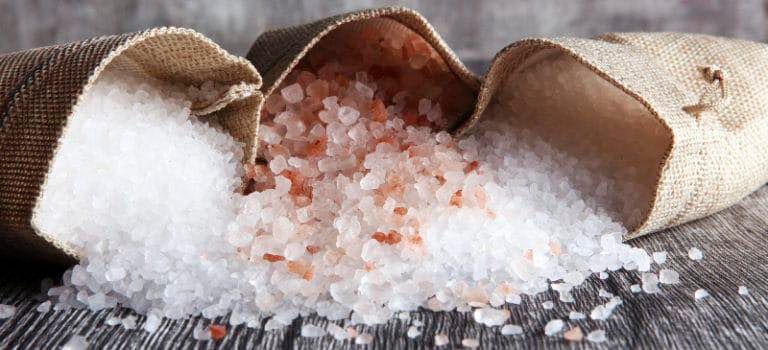
Salt has been used as a natural flavoring for thousands of years
But in recent years, salt has come under the microscope and been labeled an UNHEALTHY substance we should cut out of our diets for the sake of our heart health. Salt has somehow become the big bad wolf. But all salt is not created equal, and there is definitely a difference between unrefined, mineral-rich varieties like sea salt and Himalayan salt compared to regular table salt, which has been heavily processed and stripped of all its natural nutrients.
So is sea salt or Himalayan salt good for you?
When you eat sea salt that has undergone very little processing, you have a salt that contains health-promoting trace minerals. It also has natural flavors and colors that make it far more interesting to cook with.
Salt has always been essential to human life, since we need sodium to survive.
Table salt and sea salt are two of the most common types of salt found both on grocery store shelves and in our spice racks at home. So what are the differences between sea salt and table salt?
Table salt is mainly extracted from underground salt deposits. It is heavily processed, stripped of its healthy minerals, and heated to 650 degrees Celsius.
During this extreme process, its chemical composition is completely altered, destroying many of its potential health-promoting properties.
Pink Himalayan salt is one of the most popular examples of a rock salt, but other varieties are also available, harvested from different regions around the world.
Health benefits
Sea salt has been a star ingredient in many forms of traditional medicine for centuries. In fact, ancient Ayurvedic texts even mention it, considering it essential for the body's function and growth.
According to Ayurveda, salt should be unrefined to offer the greatest health benefits. Sea salt is believed to act as an antidiuretic and help soothe the throat, clear the sinuses, support electrolyte balance and aid in detoxification.
In traditional Chinese medicine, it is used to cool the body and regulate levels of water and moisture. It is also said to improve kidney health, flush out toxins and promote proper digestion.
Here is more about the benefits of sea salt, backed by research
1. Rich in trace minerals
High-quality sea salt typically contains upwards of 60 trace minerals, and for specific types like Himalayan sea salt, that number is said to be closer to 84. Either way, sea salt is a great source of micronutrients.
It has become harder and harder to get trace minerals from the food we eat because of nutrient-depleted soil. However, trace minerals are still abundant in the ocean, from which we get a variety of sea salts.
2. Prevents dehydration and balances fluids
By consuming sea salt every day, you also ensure that you maintain adequate sodium levels, which helps balance the sodium-potassium ratio in your body. Sodium and potassium are two electrolytes that work together to ensure proper fluid balance in your body's cells, as well as in your blood plasma and extracellular fluid.
3. Loaded with electrolytes
The minimal processing of unrefined sea salt allows it to retain much of its natural mineral content. It contains many of the most important electrolytes, such as sodium, magnesium, calcium and potassium, which are absolutely essential for good health.
Electrolytes have so many vital functions, from regulating your heartbeat to allowing your muscles to contract so you can move. Sea salt can help you avoid an electrolyte imbalance, which can cause all kinds of serious negative symptoms, including some that are potentially fatal.
4. Promotes brain, muscle and nervous system function
As a good source of sodium, sea salt is essential for proper brain, muscle and nervous system function. Not only does sodium play a role in regulating the body's fluid balance, it is also necessary for transmitting electrical signals throughout the body.
Why is this so important? Without the proper transmission of electrical signals in the body, many of its functions can stop working as they are meant to.
Without this communication system working as it should, the brain, muscles and nervous system are especially prone to suffering. Both too much and too little sodium cause cellular malfunction.
5. Supports digestion
Not getting enough salt in your diet can also negatively affect your digestion. In fact, a lack of salt in the diet can lead to a reduction of hydrochloric acid (HCL) in the stomach.
If you have low stomach acid, it can throw your digestive system out of balance, contributing to problems like heartburn, stomach pain, vomiting and constipation. Consuming the right amount of sea salt can help your body produce proper amounts of HCL, since it provides chloride, one of the building blocks of stomach acid.
6. Promotes nutrient absorption
Having enough stomach acid also helps our bodies absorb vitamins and minerals like calcium, zinc, iron, folate and vitamin B12. For this reason, regularly consuming high-quality sea salt can help your body absorb more nutrients from the food you eat.
This is good news, since it is not only what you eat, but how your body processes what you eat that gives your body the essential nutrients it needs on a daily basis.
7. Regulates blood pressure levels
Sea salt can help balance blood pressure levels, although the relationship is complex. While excessive sodium intake is generally associated with increased blood pressure, this type of salt contains minerals that may have a moderating effect.
For example, the potassium in sea salt helps counteract sodium's blood pressure-raising effects by promoting sodium excretion. Meanwhile, magnesium, also found in this type of salt, helps regulate blood pressure by relaxing the blood vessels.
8. Supports skin health and fights inflammation
Sea salt has shown benefits for skin health and reducing inflammation in several ways.
For example, bathing in the ocean or in a bath with sea salt has been shown to improve skin hydration and reduce inflammation.
These benefits are attributed to the rich mineral content of sea salt, especially magnesium, calcium, potassium and zinc. These minerals play various roles in maintaining skin health, including reducing inflammation, promoting cell renewal, balancing hydration and regulating pH levels.
Himalayan sea salt
Many believe Himalayan sea salt is the purest salt available on the planet. With a history stretching back to the creation of the Earth, it is believed to be composed of the dried remnants of the original primal sea.
It is known as "pink gold" or "pink sea salt".
Himalayan crystal salt contains all the elements found in your body. Because of its amazing nutrient content, functional medicine doctors report that regularly consuming Himalayan salt can help:
Regulate fluid balance throughout the body
Promote healthy pH balance in your cells (especially your brain cells)
Promote healthy blood sugar and help reduce signs of aging
Help maintain the electrical charge of the cells in your body
Absorb food particles through the intestinal tract
Support respiratory health
Promote sinus health
Prevent muscle cramps
Promote bone strength
Regulate your sleep
Support your libido
Promote vascular health
Regulate blood pressure with adequate water and potassium intake
Celtic sea salt
Celtic sea salt is comparable to Himalayan crystal salt in composition and health benefits.
With its grayish hue, it is harvested naturally in Brittany, France, near the Celtic Sea, using a 2,000-year-old Celtic method. Interestingly, this salt retains its moisture no matter how you store it.
Pay close attention to the ingredient label, and choose a product with minimal added ingredients to ensure you are getting the best possible quality.
Once you have gotten hold of high-quality sea salt, there are countless ways to start adding it to your routine. One of the simplest is to swap it in for table salt in your favorite recipes, using it to season main dishes and sides. A little tip - place a flake of salt under your tongue whenever you drink a glass of water. This helps the water reach into your cells instead of just flowing right through you.

In addition, if you cut table salt completely out of your diet, it is important to make sure you get iodine from other food sources. You will find iodine naturally in foods like seaweed, dairy products, seafood and eggs.
If you do not usually eat any of these foods, choosing an iodized sea salt can be a good option to make sure you cover your daily iodine needs.
By cutting down on ultra-processed foods
that are full of table salt and stripped of nutrients
- and adding mineral-rich sea salt to your diet,
You have taken powerful steps for your own health
Article by Dr. Josh Axe and Rachael Link - translated and edited
Would you like to feel it yourself? Join the free distance healing – every Monday at 9 PM Norwegian time. Free and without obligation, from anywhere in the world.